
Michigan Social Worker Finds Common Humanity in Tanzanian Villages
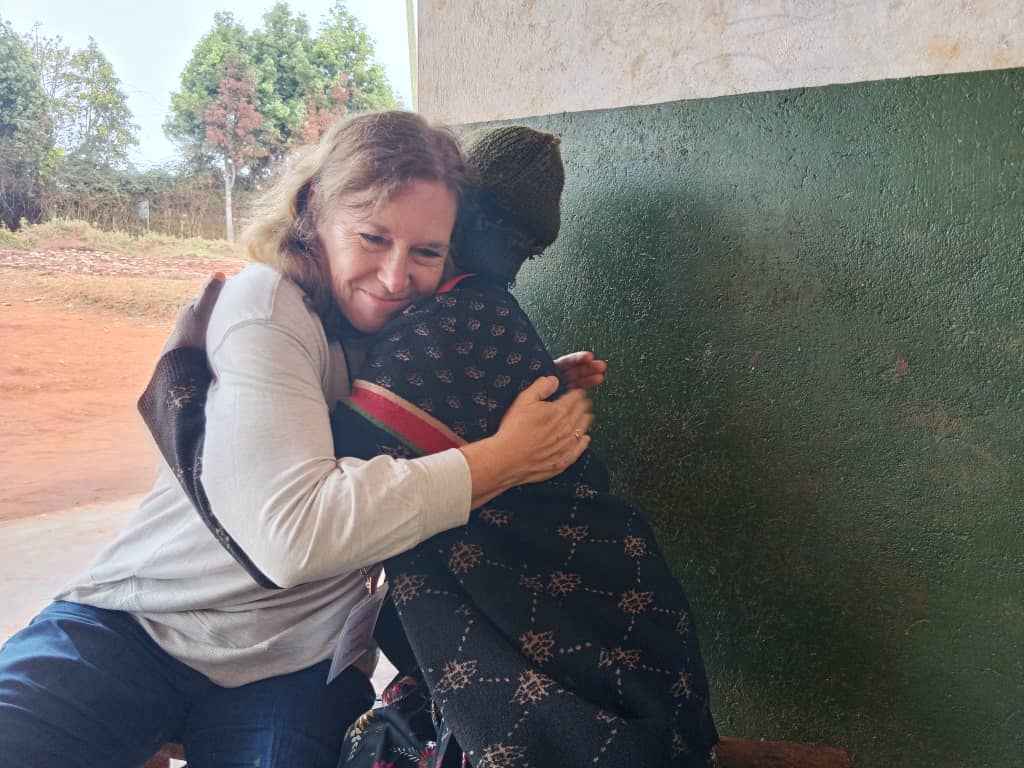
Teresa Patterson has a wish list; a travel legacy, really. Conjured in adolescence, the number of destinations grew every year to match her expanding curiosity about the world. She credits her early wanderlust, fascination with different cultures and socially responsible family members for her childhood desire for service travel. Read on to learn about her path to Global Volunteers and the Tanzanian mothers and children who’ve captured her heart.
“See, my dream was to work for the State Department Agency for International Development, because my uncle had worked around the world,” Teresa explains. From an early age, she was captivated by his stories of cultures and societies outside her hometown and country, and wanted the same experience for herself.
“I got the National Geographic, and my parents were like, what are you doing? Where are you, where are you going?” Teresa chuckled.
Her first trip abroad, as a young teen was to Belize through 4-H, having been selected as only five students in Michigan to participate. “It was my first plane ride, and we stayed with a family with eight children for part of the time,” she said. “And it was mind-changing. “We were walking through the village, and we see this woman bawling her eyes out, carrying a baby, and I’m like, what’s going on?” She learned the baby had died in the small. local hospital. “They called it a hospital, but it wasn’t much of a building,” she continued. “The villagers went there only at the end, because they’re afraid they’d die. That’s how they talked about it, because that’s what happens. They wait too long to seek medical help, and that reinforces the belief that if you go there, you’ll die. There was so much that just blew my mind on that trip.”
A different encounter with a girl much younger than her on the same trip demonstrated the power of cross-cultural respect. “This little girl walks over with an egg in her hand, and she said, ‘this is for you, I heard Americans like eggs.’ I was, oh, my gosh! It was like giving me gold, you know, the food. I’ll never forget that clear memory from when I was staying in that little town, that village.”
That journey, now 50 years ago, ignited a profound care for the world that has carried her through service to children and adults and travel to 48 countries and all 50 states. As she was preparing to retire from social work in 2021, she remembered a neglected teenaged dream – to serve an Indian nation. It was at the top of her wish list at age 15 – the summer of her Belize trip. Following that, she was selected to volunteered in Honduras and the Dominican Republic. The years passed with this destination still beckoning .
“I really wanted to understand the reservation, talk to people, see things, you know.” She turned to Global Volunteers to fulfill her delayed dream. “It’s like a short-term Peace Corps,” she said. “It fit into my schedule, and I love to serve to widen my horizons for personal growth. I’m a hands-on learner. I enjoy visiting another country to meet new people and learn about their culture up close,” she continued. “I believe that it’s important to give back and to understand others and the larger world.”
“You can’t get a better way to know you made an impact.”
So in 2022, she served the Blackfeet Nation in Montana. In the following years, she joined Global Volunteers in Poland and Cuba. Then in 2026, she responded to Global Volunteer’s appeal for healthcare volunteers to serve the Tanzania Mental Wellness Initiative. “Mark Twain once said that ‘Travel is fatal to prejudice, bigotry and narrow mindedness.’ I am grateful that the volunteer work can help me gain a new perspective on the world,” Teresa reflected.
In the villages of the Ukwega Ward, Teresa made personal house calls to vulnerable mothers and children. “I specialize in working with teens and young adults,” she explained. “Being a social worker, I get present with them. I listen, you know, let them take their time. If they don’t feel like talking today, that’s fine.”
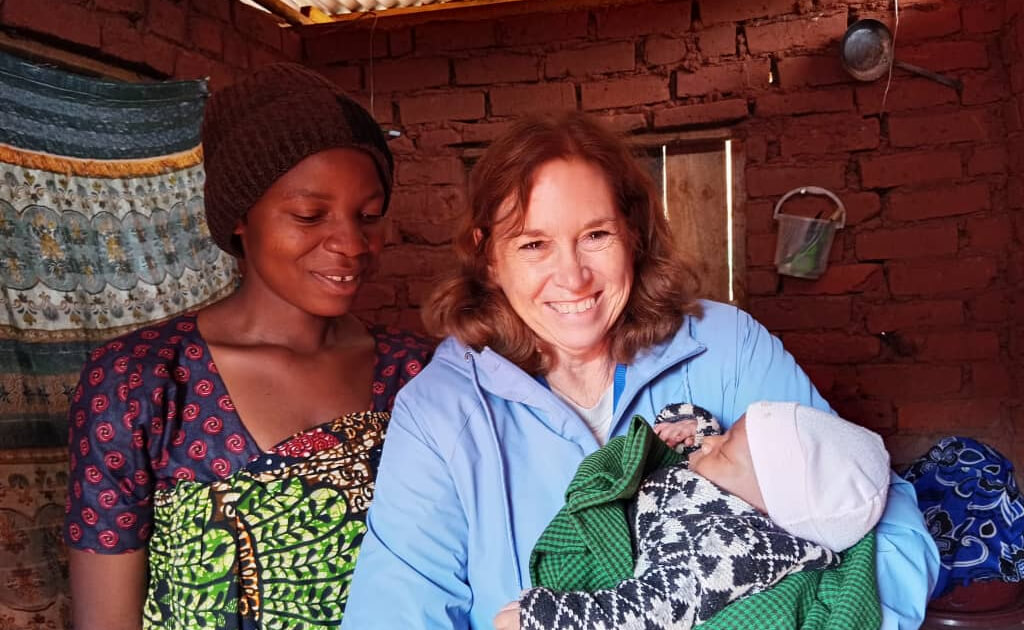
Each morning, Teresa accompanied a Global Volunteers caregiver on their home visits to mothers participating in the Reaching Children’s Potential Program (RCP). Caregivers are trained as outreach workers to provide one-on-one support and education on health, nutrition, parenting and child development. In their monthly visits, they use a depression screening tool to identify mothers displaying emotional and behavioral distress or risk for gender-based violence (GBV). Referrals are made to Global Volunteers’ GBV coordinator and the Ipalamwa General Clinic (IGC) if warranted. Volunteers with specialized skills are employed to both counsel mothers and provide additional ideas or training to caregivers. Teresa said she encountered several concerns in these home visits that followed a similar path as her client support at home.
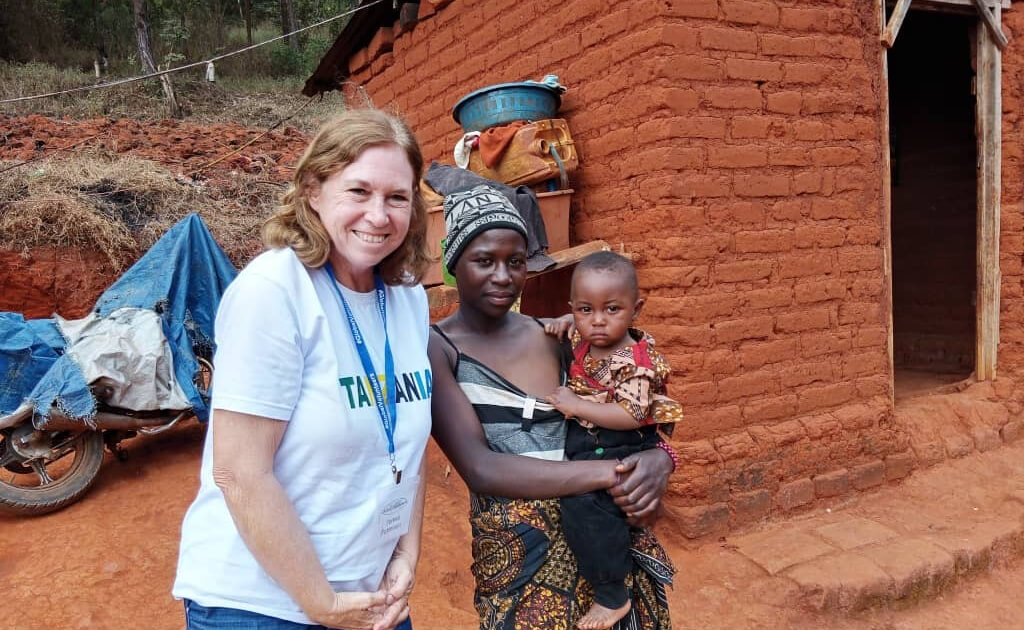
For instance, she met a mother who expressed to her great distress about pressure from her parents around an issue with her husband. She explained they were trying to assert their own desires for her life and rejecting her clearly stated needs. Teresa felt she could help the mother address the impasse with her parents with the assistance and translation of Mental Wellness Education Manager Regina Mhagama.
“We decided to talk to her about boundaries,” Teresa explained. “She was open to trying it, and at the end, we even practiced a role-play. I said, let’s practice this with a role-play, because it’s very hard for many people to set boundaries and understand that it’s okay.” Teresa played the role of the parent, and the mother practiced asserting her desires calmly and lovingly. “It’s a positive thing to do for yourself. And she was kind of understanding some of the language, and how to approach her family members.”
“It seemed to work; I could see it in her eyes,” Teresa reflected. “I could tell it gave her a lot of relief that this could be done, and that maybe things could change.”
Many of her home visits were with mothers who were identified as needing psychosocial interventions. “It was such a learning experience, and I wanted reciprocity (with the women), because I want to make a difference. You just go there and be present.”
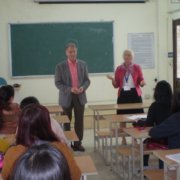
In the afternoons, Teresa presented workshops on human trafficking to Global Volunteers staff, parents, community leaders and students. Trained by her county offices in Michigan, she worked with Global Volunteers staff to adapt and translate her presentation to address circumstances in the local area.
“It was pretty basic information, but most of the groups we talked to really didn’t know much about how widespread and globally common trafficking is,” said Teresa. “I think I got close to a hundred people between all the different groups. We answered a lot of questions, and we just got to some of the good details and nitty-gritty of what was happening locally.” She emphasized: “They were very engaged, even expressing hope. But the biggest thing is, I said, okay, you’ve got to spread the word. And they got that, especially the teens. They’re like, yeah, we’re going to go tell our friends.”
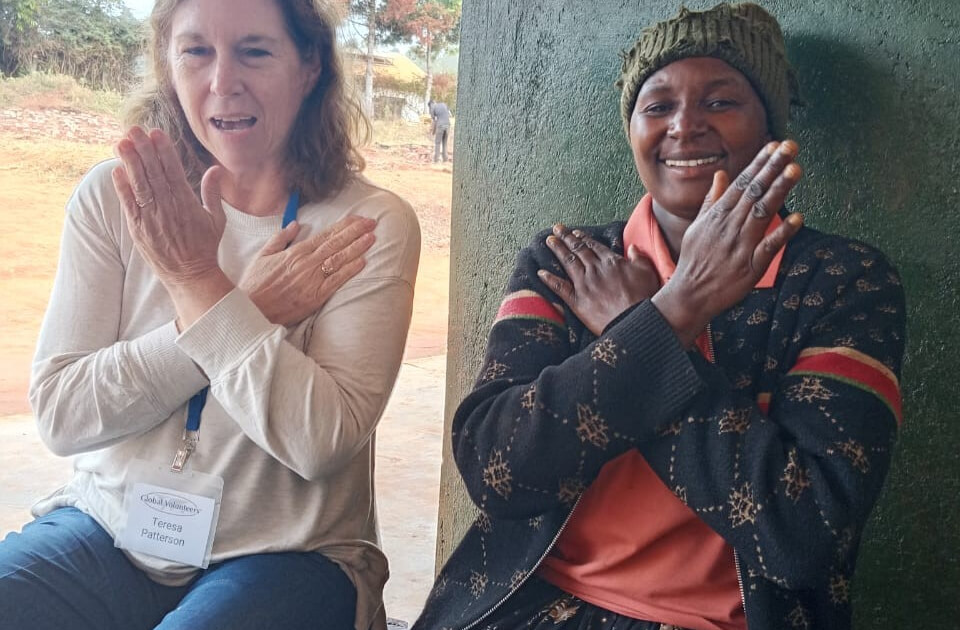
Teresa recalled a session with school girls who opened up to her about gender issues that concerned them. “Regina and I felt honored they trusted us,” she continued. “I think it was because of the work you (Global Volunteers) have already done, and the trust they have in Regina, who is a new social worker.”
They took the students’ concerns to school staff along with ideas on how to go forward positively to resolve the issues. “They were taking notes and seemed genuinely interested. And you know what? They were able to talk together and make some changes for the students.,” Teresa beamed. “I was happy we could help move this forward and not just push it aside. So, it was a very positive meeting.”
“I remember the kids, especially. They would call to me, walk with me, want to talk. And they, oh my gosh, they just broke my heart with happiness.”
She said she treasured the expressions of gratitude, written and spoken, from mothers and students after each home visit and group meeting. “I’m just, again, so impressed how interested, how much they followed my speaking, the questions, and of course, all those beautiful thank you notes. it just shows me that it’s really important to them, you know?” She’s confident that several of the students and community leaders will ensure the conversation she started will continue to percolate throughout the tight-knit community. “You can’t get a better way to know you made an impact.”
She credits Global Volunteers’ staff in helping her quickly acclimate to the host community, and to fully engage her in daily service projects. “What a lovely community to be in. All the staff were so kind and friendly. You’ve laid such a good groundwork with the clinic, and so there’s this inherent built-in trust, and then mental health, it just opened (local people’s) hearts already.”
“Regina and Jordan, with whom I worked every day, were able to listen, and learn, and guide me in the right direction to reach everybody. They were my translators, and we processed things together over the two weeks. I’ll be forever grateful for them and my time in Tanzania.” Further, she said, “it was great to be able to walk right in with an established staff team so we could really do the work. They were so supportive of me, and I tried to be the same for them.” For instance, Teresa was able to share her decades of experince with Regina, who is finishing her graduate degree in social work.
“That whole system there is amazing. I have great hopes that the mothers and children will continue to benefit from all the service that they’re getting. I’ll go back again, and I really encourage anybody in the mental health field to go on this wonderful journey.”
Further, she said, “When I describe Tanzania to people – because everyone’s so interested – I say it was beautiful, it was sad, it was wonderful, it was heartbreaking. I remember the kids, especially. They would call to me, walk with me, want to talk. And they, oh my gosh, they just broke my heart with happiness. They were the sweetest, happiest kids I’ve ever seen, and here they are, the dichotomy of it, with this poverty. But, they lit up my days.”
Read more about how mental health professionals contribute to ongoing projects, and how you can serve for one, two or three weeks year-round. Call a volunteer coordinator at 651-407-6100.
You may also like:

Leave a Reply
Want to join the discussion?Feel free to contribute!