
MACHELA MAMAS LEARN TO TRUST THEMSELVES AND LEAN ON EACH OTHER
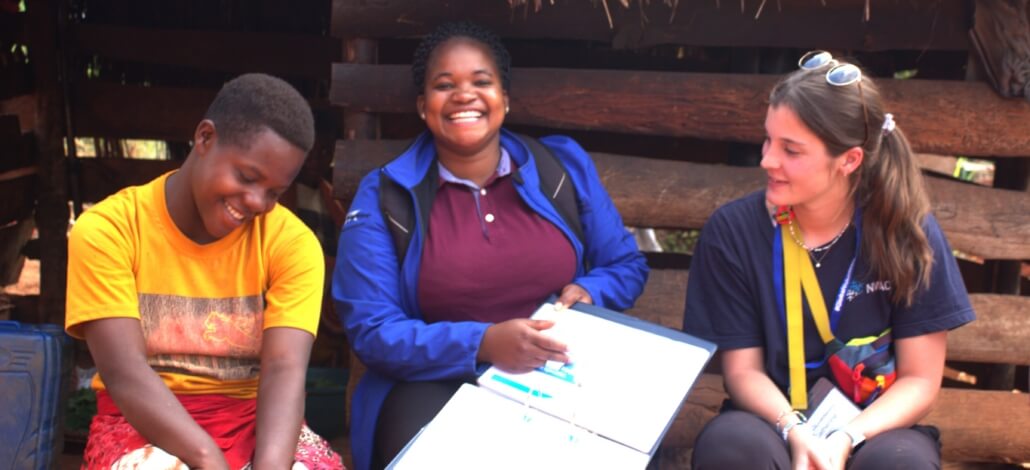
In 2022, Global Volunteers’ Mental Wellness Initiative identified a small group of destitute mothers participating in the Reaching Children’s Potential Program (RCP), living in deeply impoverished conditions in the rural Ukwega Ward of Tanzania. Lacking most social and economic supports, these young single mothers fall significantly below the average health, education and economic capacities of most village women. Without targeted interventions, they and their children are vulnerable to violence and exploitation, degenerating health, and lifelong poverty.
The Mental Wellness Initiative demonstrates that mothers who engage in productive activities shift their focus away from depressive thoughts and dependency, find purpose, meaning, and a sense of achievement. This puts them on the path to improved mental health, self-worth and family stability. Mothers who feel supported are able to thrive in the village to raise their children and contribute to overall community wellbeing. This is the goal of the Mental Wellness Initiative “Machela Mamas” Project. Global Volunteers helps to provide protective relief (in the way a machela – hammock – permits physical and mental rest) in supporting vulnerable mothers while they gain capacity through an added layer of resources. Staff and volunteers help mothers work toward:
• Reliable income generation
• Stable, safe housing
• Essential classroom education
• Practical living skills
• Practical parenting knowledge
• Self-awareness and self-esteem
• Health and hygiene skills
• Nutrition and diet knowledge
• Protection from violence and exploitation
Meet Two Machela Mamas: Remija and Farida
These “Machela Mamas” have consented to telling their stories so volunteers and supporters can learn about their challenges, and so together, they might become role models for other impoverished mothers. Remija Mbata is a fun-loving, humble and thoughtful 23-year-old single mother of two-year-old Gian Kigava. Remija and her son live with her mother and father in a small, safe and comfortable home in Ukwega Village where she and her parents were born and raised. Many of her aunties, uncles and cousins live nearby.
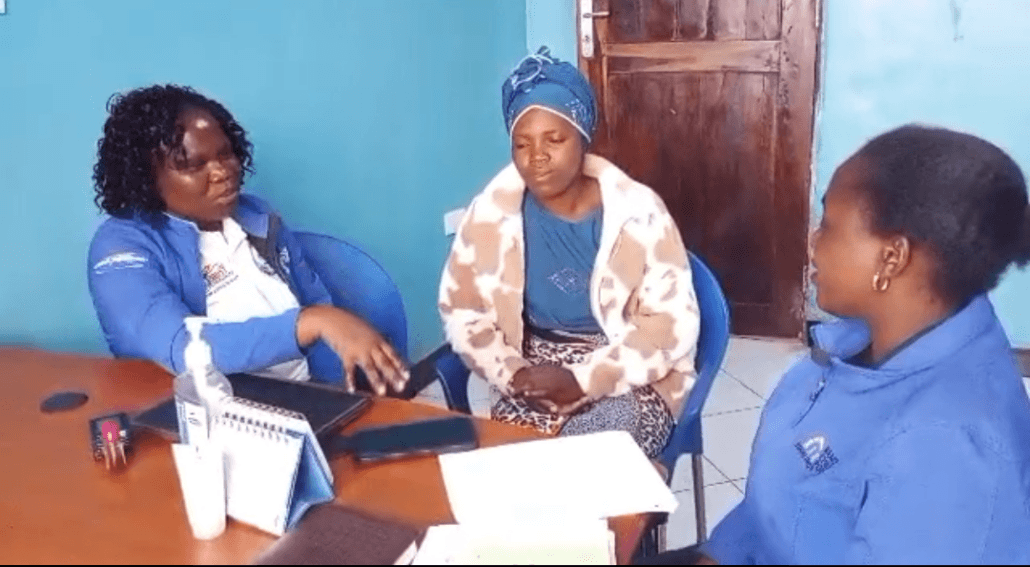
Her predictable daily routine allows her to fully contribute to her family’s well-being. Awaking at 6am, she begins her house chores – fetching enough water from the community tap to cook the day’s meals, wash dishes and laundry, and sweeping the indoor and outdoor living areas. When Gian wakes up, she quietly prepares porridge and tea while the sun fills the windows with golden morning light. She glances outside the door to predict the weather in her family’s fields about three kilometers away. This is where she’ll work throughout the morning on their crops of maize, beans, potatoes and bananas for the family’s consumption.
After breakfast, she wraps her son in the traditional kanga cloth sling which allows him to ride on her back so she can carry a hoe for cultivating the fields. As she beings her journey down the red-dirt road to the farm, she greets friends; collecting firewood along the way.
Agricultural work can be hard, but Remija is content in her role as a mother and farmer. She dreams that one day, Gian will become a teacher because that was once her dream too. She thrived in school, but because her parents couldn’t afford to send her to secondary school, she ended her formal education with standard seven. This is a common life track for many young women her age in the Ukwega Ward, and she’s inspired to help Gian surpass her own educational level. That’s why she’s committed to meeting with her RCP Caregiver every month, returning to the general clinic for Gian’s check-ups, and attending monthly RCP workshops on parenting, nutrition, new technologies and mental health.
When she returns to her house in the afternoon, she cooks ugali (a maize-based staple food consumed throughout Africa) over an open fire in the small kitchen area next to the living and sleeping area of her house. Many days, she may add avocado and seasoning or Chinese cabbage and bell peppers she grows in the Earthboxes supplied by Global Volunteers.
Sometimes she switches to rice or banana as the foundation of her meal. She remembers lessons on micro-nutrients through the RCP Program and her monthly workshops and caregiver visits, and is thoughtful about preparing a nutritious diet for herself and Gian. She can’t afford many of life’s basics, such as soap, cooking oil, and everyday clothing, so she imagines how a cooperative enterprise, such as chicken breeding or a café with other Machela Mamas could lift them all up economically. Until then, she’s committed to improving her parenting skills, learning how to stay healthy, and helping her parents keep the farm producing.
She’s grateful for her extended family, her quiet life, and the long-term support she receives from Global Volunteers’ RCP Program. She’s learned not to expect more than what village life can offer – subsistence with occasional purchases for special occasions and holidays. Providing proper nutrition and protection from disease, as promoted by RCP Caregivers, keeps her motivated.
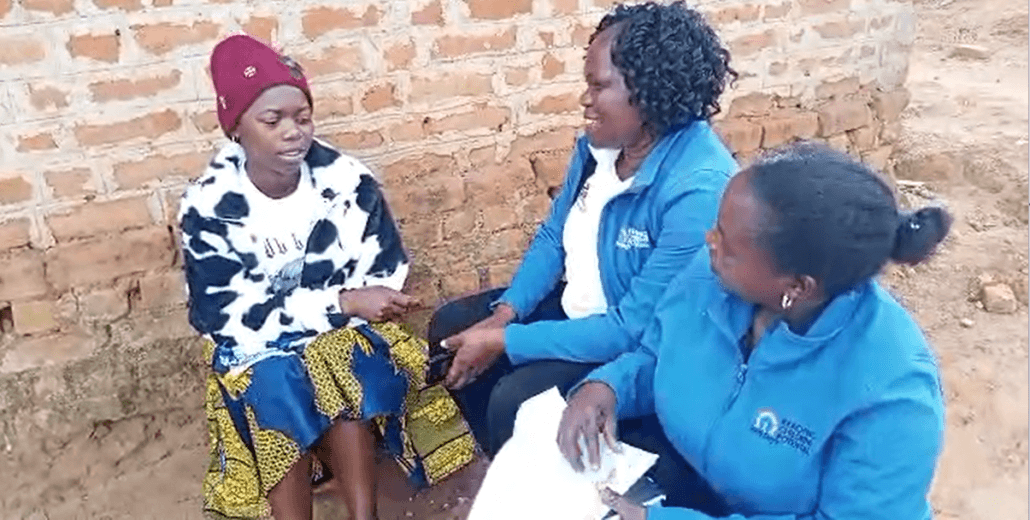
Farida Duma is a young widow living with her parents in Ukwega Village. Her 11-year-old daughter, Suzana, is in standard 6 (final year of primary school), and is very helpful with house and farm work. Farida’s 5-year-old son, Adventi, was born with a physical disability, likely cerebral palsy, preventing his ability to stand, crawl or walk. For her and other parents of disabled children, to obtain specialized medical services is beyond economic reach. Although the country’s new Universal Health Insurance (UHI) program — Bima ya Afya kwa Wote —promoting free coverage for elders, children, and disabled and pregnant people was launched in January 2026, in practice no access has been extended to rural areas. So she relies on the fortified meals, home visits, mental health counseling and hope she receives from RCP staff and volunteers to care for him at home.
She and her parents, like her grandparents before them, are farmers, growing one to two crops of maize and wheat each year for ugali. They may also raise two to three crops of vegetables for their family’s consumption. In Tanzania, smallholder farmers work an estimated 85 to 90 percent of the country’s cultivated land. She and her neighbors farm less than three hectares, till by hand, and rely primarily on rainfall rather than irrigation.
Farida is representative of some 80 percent of rural Tanzanian women who work in agriculture. Despite providing the majority of labor on farms, their partners or husbands tend to ultimately own the crops that women produce – and the fields they work in. In this way, women are held reliant on the men in their lives. Farida feels fortunate that she can rely on her family, and while she enjoys farming generally, she dreams of one day having her own agricultural business to become a model of independence for her children.
This morning, Farida’s daily rhythm is comfortable and paced. She prepares the customary ugali and tea for her parents, children and herself. She’s satisfied, and accustomed to, the traditional ugali meal. Like other villagers, she supplements with available vegetables; sometimes switching to rice or bananas for variety. It doesn’t typically occur to her that her diet could be more varied than this. She’d like to provide more protein to her family, so she’s drawn to the idea of raising chickens and eggs as a source of nutrition and income. She sees how this capacity has improved the lives of some of her neighbors, and wants to work with Global Volunteers on a chicken cooperative.
For now, nearly every day, she works the family farm knowing this is how she can best care for her children. During these hours, her thoughts go to hopes for their future. Foremost in her mind is a wheelchair and physical therapy for her son to learn to walk and develop his full potential. Sometimes it feels like too much, and her depression overtakes her. She knows that others don’t understand how difficult it is to care for a disabled child, so their pity can feel shameful.
Yet, Farida’s very grateful to her loving parents who help her meet most of her children’s basic daily needs. She knows that several other Machela Mamas aren’t so fortunate. Working with the RCP Program, she and the others attain free health services, supplemental meals, and technologies like Earthboxes and handwashing stations. She believes her humble life will improve so she can achieve the confidence to overcome the hardships in front of her.
Consistent Support is Foundational to Optimal Outcomes
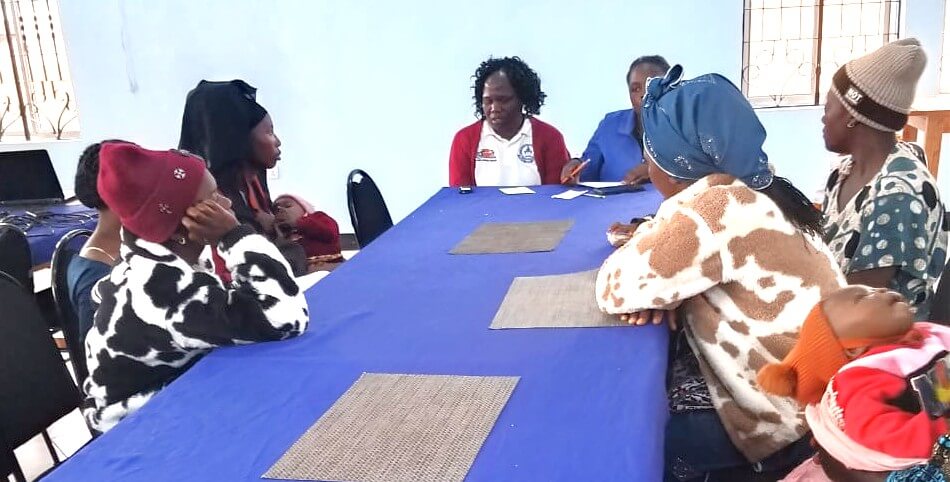
In forming the Machela Mamas group, participating mothers are encouraged to learn from and support each other inside and outside monthly meetings. Targeted services are provided year-round by Global Volunteers’ Mental Wellness Initiative staff, RCP Caregivers, Ipalamwa General Clinic medical staff, and short-term Global Volunteers mental health team members. Nine mental health volunteers have worked directly with vulnerable mothers in 2022-26 in assessing individual social, educational, health and economic needs, creating individualized parenting and nutrition plans, conducting outreach activities, presenting life skills workshops, providing individualized therapy, planting Earthboxes, and referring mothers and children to IGC for additional treatment.
Ukwega Ward leaders, likewise, rally around the most disadvantaged mothers in the five villages of the Ukwega Ward to help identify and support the Machela Mamas Project. They identify available local resources and provide referrals to emergency services and limited funds at the District and Regional levels. Because of the pervasive poverty in the Ukwega Ward, significant additional funding is required to meet the pressing needs identified by community leaders for the Machela Mamas Project.
You Can Make a Significant Difference!
Healthcare volunteers of all backgrounds are needed year-round to provide direct services to Machela Mamas. Talk with a Volunteer Coordinator at 651-407-6100 to learn how you can contribute your skills on an upcoming Tanzania Service Program.
You may also like:

Leave a Reply
Want to join the discussion?Feel free to contribute!