
Why Teaching Conversational English is One of the Most Powerful Uses of Volunteer Time Off
In today’s global economy, the ability to communicate in English is not just a luxury—it’s a necessity for millions around the world. According to a 2023 British Council Study, 2.3 billion people speak English. That still leaves about 70% of the global population without access to this critical skill. For corporations offering Volunteer Time Off (VTO) programs, supporting conversational English education isn’t just altruistic; it’s transformative. Employees who volunteer to teach English can unlock life-changing opportunities for individuals and contribute meaningfully to international development.
English: The Language of Global Opportunity
The dominance of English as the language of international business is undeniable. In the 1970’s, one of the first companies to establish English as their corporate language was KONE, a Finnish elevator company. Forty years later, in 2010, Hiroshi Mikitani, CEO of the Japanese e-commerce company Rakuten, abruptly declared English their corporate language. At the time, only 10% of Rakuten’s employees spoke English. All were given two years to become fluent in English or face demotion. “It’s stupid for a Japanese company to only use English in Japan when the workforce is mainly Japanese,” said the CEO of Honda Motors Takanobu Ito at the time. Nevertheless, after five years, Rakuten had increased its user base from 200 million to 1.1 billion and doubled its net revenue. During the same period, English became the corporate language at Honda, and Ito was gone. Companies like Rakuten and Honda exemplify how “Englishnization” transforms corporate competitiveness.
Beyond the boardrooms of multinational corporations, English is also the language of diplomacy, science, and tourism. Being able to communicate in English dramatically increases one’s employability and access to global systems.
The Role of VTO: High-Impact Volunteering Through Language
Companies offering VTO often seek ways to align their corporate values with community needs. Teaching conversational English hits the mark in three key areas:
- Scalability – English skills can be taught and practiced one-on-one, in small groups, or in classrooms, enabling flexible team-based volunteering.
- Sustainability – Unlike short-term donations, language skills remain with learners for life, often passed on to family members and peers.
- Cultural Exchange – Volunteers gain invaluable cross-cultural understanding, enhancing their soft skills and global awareness.



Community Impact in Action: Stories from the Field
Poland: Preparing Rural Students for Global Markets
In Poland’s Siedlce County, Global Volunteers has supported conversational English classes since 1989, when the country went from communism to democracy. In a meeting with the Polish Parliament, they specifically asked for volunteers to help teach conversational English. “We have enough hands to work, but we need to speak English. We wish to work more closely with the western European countries and the U.S. We need to speak English.”
English is now a critical part of Poland’s educational and economic infrastructure. “Volunteers offer the unique opportunity to practice what students learn with their teachers, improve their pronunciation and listening skills, and help them be understood in global business settings,” says Dorota Wierzbicka, a former student who now manages Global Volunteers’ Poland program.
Greece: English as a Lifeline for Tourism and Recovery
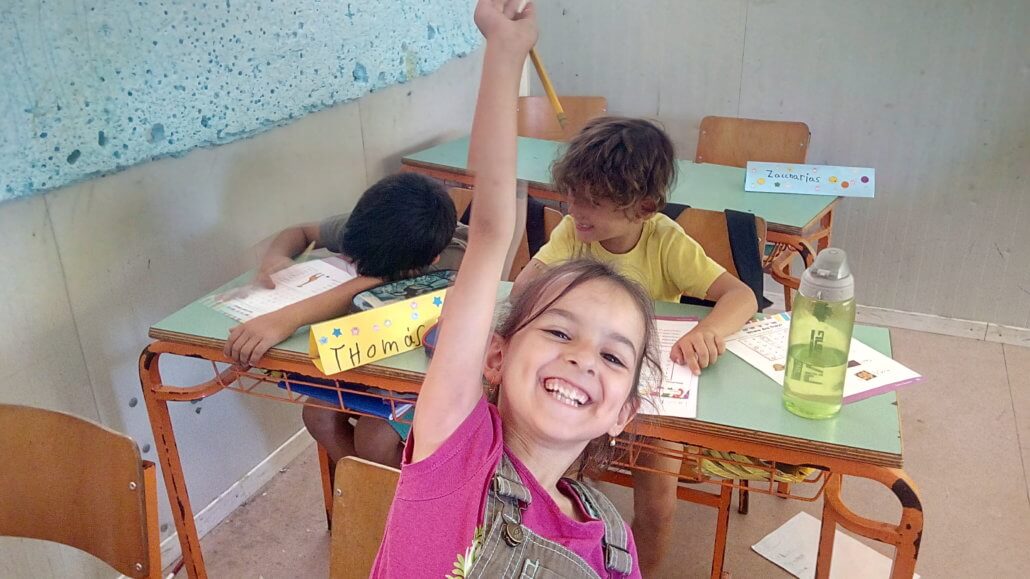
Tourism represents over 12% of Greece’s GDP and 40% of all employment, and English is the language that powers it. After Greece’s economic crisis, English proficiency became essential for recovery. Sixth-grade students in Crete shared why they want to learn English: “I want to work abroad,” “It will help me find a job,” “I want to study abroad.”
Cretans who wish to work in one of the three sectors of the Cretan economy today require a good knowledge of the English language to avoid being among the unemployed on the island, and certifying that a Greek national speaks English usually requires international certification. International English examinations such as the TOEFL and the Michigan English tests provide this certification. The exam is broken down into four parts: listening, writing, grammar/vocabulary, and speaking. Examiners from the U.S. fly to Greece to test the children, so you can imagine that for many Greek children, this is the first time they converse with a native English speaker.
Cuba and Peru: English as a Pathway to Professionalism
In Cuba, where careers in diplomacy and tourism are highly sought-after, students like Roig Ramirez and Arley Ahu credit Global Volunteers’ English program for accelerating their studies. Similarly, in Peru, Liz Díaz rose from a vulnerable background to become a professional English teacher. She now teaches other children in the same community where she once needed help herself.
Why Corporations Should Get Involved
For businesses with global footprints, investing in English language education is more than philanthropy; it’s strategic CSR. Here’s how teaching English through VTO can align with corporate goals:
- Employee Engagement: Volunteering builds morale, teamwork, and purpose among employees.
- Talent Development: Employees who teach build leadership, empathy, and cross-cultural communication skills.
- Global Citizenship: Supporting English learning fosters equity, inclusion, and shared prosperity across borders.
English Is a Gift, Not a Given
In predominantly English-speaking countries such as the United States, fluency in English is often taken for granted. But in most of the world, fluency is a powerful competitive advantage and often the only bridge to formal employment, higher education, and upward mobility. For those without access to language instruction from a native speaker, the involvement of a volunteer educator can be transformative.
“When our volunteers teach conversational English, they don’t just open doors to opportunity,” says Wierzbicka. “They help connect, inform, and unify the world.”
Turn VTO Into Global Impact
Use your Volunteer Time Off to teach conversational English with Global Volunteers. Short-term volunteers help to bridge cultures, boost job prospects, and expand educational horizons, one conversation at a time.
Groups of all sizes and compositions have served with Global Volunteers on six continents since 1984. Reserve a regularly scheduled program, or propose custom dates that fit your schedule. Depending upon your group’s size, you can serve as an exclusive group or join with other volunteers.
Complete the form below for more corporate volunteer abroad information, or call: (800) 487-1074









Leave a Reply
Want to join the discussion?Feel free to contribute!